Gen Z luxury culture feels different today because the internet changed how young people experience status, aspiration, and success. Luxury used to feel untouchable, and in many African homes, that distance gave it meaning.

Growing up, luxury was not something most people experienced directly. It was something people imagined through television screens, music videos, imported magazines, or stories from relatives abroad.
A designer belt.
An expensive wristwatch.
A foreign perfume.
A German car parked in front of a hotel.
Those things carried emotional weight because they represented escape.
For many millennials across Africa, luxury was deeply connected to survival psychology.
It symbolized movement.
Movement away from struggle.
Away from scarcity.
Away from “suffering.”
In many African societies, success was visual long before it was emotional.
People respected what looked expensive because expensive things were associated with achievement.
Owning luxury items often meant the following:
“I made it out.”
“I changed my family story.”
“I touched a different level.”
And honestly, that mindset made sense.
Because many people came from environments where life was genuinely difficult.
Luxury became proof of transformation.
But Gen Z grew up inside a completely different reality.
Not necessarily easier…
just more exposed.
The internet changed the emotional meaning of luxury.
Especially in Africa.
African Gen Z Grew Up Watching The Performance Of Wealth
Previous generations saw wealth occasionally.
Gen Z sees it every hour.
That changes psychology.
A teenager in Lagos can wake up and watch a Dubai influencer before breakfast.
A student in Nairobi can scroll through five millionaire lifestyles before class.
A young creative in Accra can spend the entire day consuming aesthetics designed to look successful.
The internet collapsed distance.
And once distance disappears,
illusion weakens.
That’s the biggest difference.
Millennials admired luxury from afar.
Gen Z watches the machinery behind it in real time.
They see:
fake lifestyles,
borrowed cars,
rented apartments,
edited vacations,
forced soft-life content,
counterfeit fashion,
paid promotions,
and influencers struggling privately while performing success publicly.
The internet exposed how branding works.
And once people understand performance,
they stop trusting appearances emotionally.
Especially African Gen Z.
Because many of them understand hustle culture too personally to romanticize appearances blindly.
They know what it means to look okay online while surviving offline.
That awareness changed everything.
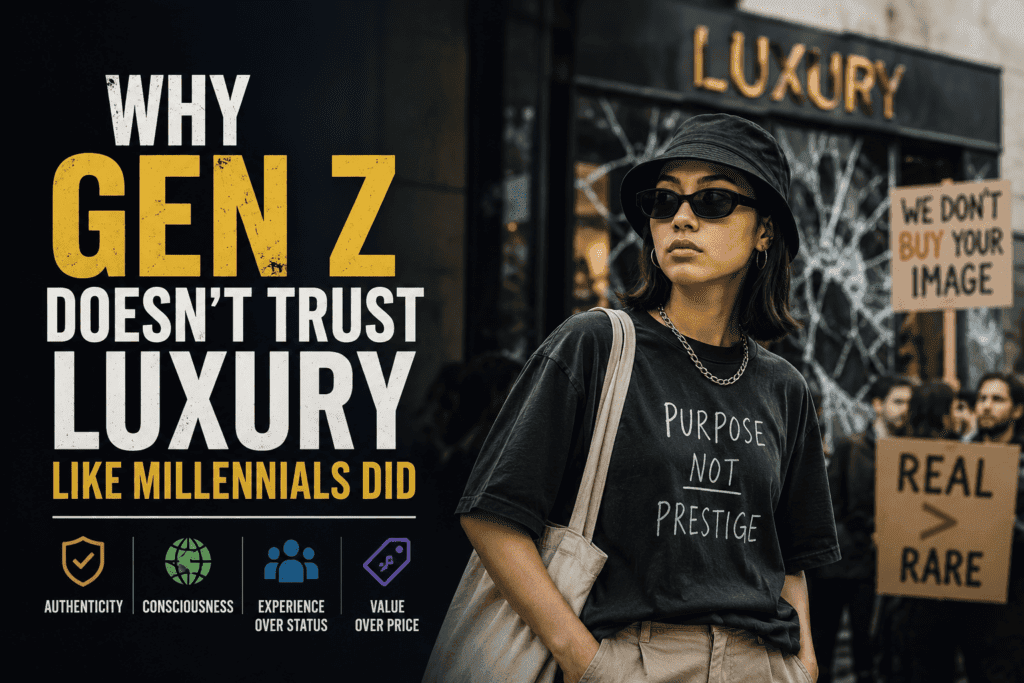
This is one major reason why Gen Z Doesn’t Trust Luxury Like Millennials Did anymore.
In Africa, Luxury And Survival Exist Side By Side
One reason this conversation feels different in Africa is because inequality is extremely visible.
You can see extreme wealth and extreme struggle on the same street.
A Range Rover can drive past roadside hawkers within seconds.
That contrast affects how young Africans emotionally process status.
Gen Z grew up asking difficult questions:
Why are people performing wealth so aggressively?
Who is this performance really for?
Is this success…
or just pressure?
Many young Africans no longer see luxury as inspiration alone.
Sometimes they see it as performance culture.
And social media intensified that feeling.
Because online, everyone suddenly looks rich.
Everybody appears successful.
Everybody appears booked.
Everybody appears soft-life.
But offline reality often tells a different story.
That contradiction created emotional skepticism.
The African Internet Changed Status Culture
African millennials were raised during an era where imported brands felt sacred.
Foreign labels carried prestige automatically.
Wearing luxury meant proximity to global culture.
But Gen Z grew up during the rise of African internet culture itself.
Now they see:
African creators,
African fashion brands,
African photographers,
African designers,
African storytelling,
African aesthetics,
and African influence shaping conversations globally.
That changed the emotional hierarchy.
Young people no longer worship foreign branding the same way automatically.
They question it.
They compare it.
Sometimes they even prefer authenticity over prestige.
A locally made piece with strong identity can emotionally connect more than an expensive designer item with no cultural meaning.
That shift matters.
Because Gen Z increasingly values relatability over intimidation.
Gen Z Understands Branding Too Well
Another major difference is this:
Millennials consumed branding.
Gen Z studies branding.
This generation grew up inside algorithms.
They understand virality.
They understand aesthetics.
They understand attention manipulation.
They understand influencer marketing.
They understand psychological selling.
And because of that,
luxury no longer feels mystical.
It feels engineered.
That does not mean Gen Z hates beautiful things.
Far from it.
African Gen Z still loves:
fashion,
design,
cars,
technology,
travel,
music,
good experiences,
and visual excellence.
But they increasingly want emotional honesty attached to those things.
They want story.
Not just display.
Meaning.
Not just prestige.
That’s why many younger consumers emotionally connect faster with the following:
creative independence,
personal identity,
minimalism,
quiet confidence,
and authentic storytelling
than loud status signaling.
The “Soft Life” Era Also Changed Everything
The rise of soft-life culture across African social media changed how young people think about success.
Previous generations admired struggle publicly.
Gen Z romanticizes peace.
That changes luxury psychology too.
For many millennials,
Luxury meant visible symbols:
cars,
designer logos,
expensive champagne,
status display.
For many Gen Z consumers,
Luxury increasingly means the following:
freedom,
rest,
privacy,
mental peace,
creative control,
flexibility,
time,
and emotional stability.
That is a completely different emotional definition of wealth.
And honestly,
it reflects the exhaustion many young Africans feel watching economic pressure, unstable systems, rising costs, and survival culture daily.
Many no longer dream only about “looking rich.”
They dream about breathing peacefully.
Quiet Luxury Feels More Intelligent Now
This is partly why “quiet luxury” became attractive globally.
When everybody performs wealth loudly online,
Subtlety becomes powerful.
And African Gen Z understands this deeply.
Because internet culture made obvious status feel noisy.
The new flex is no longer always visibility.
Sometimes the new flex is stability.
Privacy.
Calmness.
Taste.
Intentionality.
Less performance.
More presence.
Final Thought
Luxury did not lose its influence.
Its emotional language simply changed.
Millennials often viewed luxury as proof of arrival.
Gen Z views it more critically.
Especially in Africa,
where young people grew up balancing ambition with visible economic reality.
This generation has seen too much online performance to trust appearances blindly.
They still admire beauty.
They still appreciate quality.
They still desire success.
But increasingly,
they want luxury to feel human.
honest,
culturally aware,
and emotionally real.
Maybe that is where the future of luxury is heading.
Not toward brands that only look expensive…
but toward brands that actually understand people.